
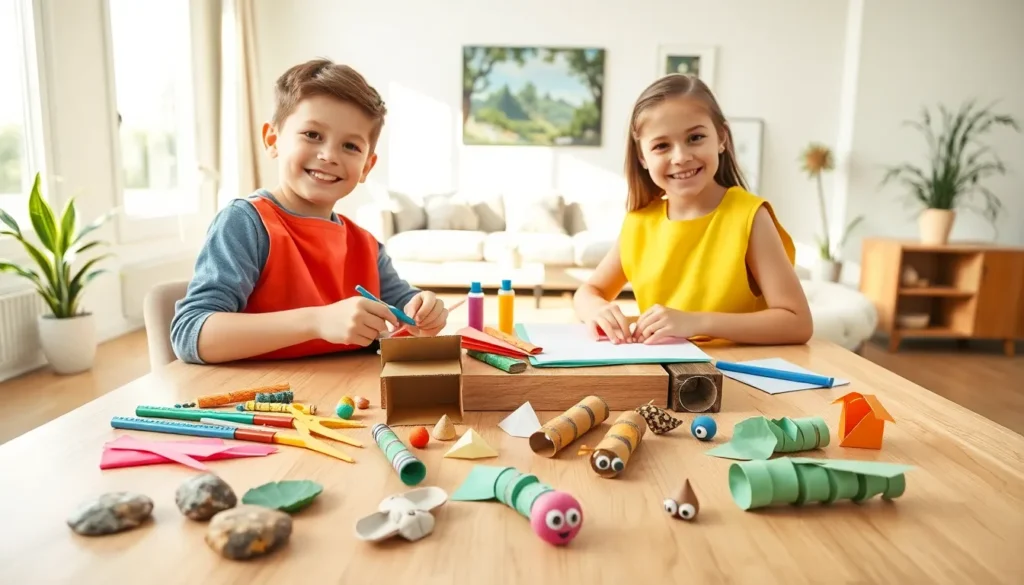

Top crafts and DIY for kids offer more than just entertainment. They build fine motor skills, spark creativity, and give children a sense of accomplishment. Whether it’s a rainy afternoon or a planned activity session, having a list of go-to projects makes life easier for parents and caregivers.
The best part? Most crafts require simple supplies you already have at home. Paper, glue, scissors, and a bit of imagination go a long way. This guide covers easy paper crafts, nature-inspired art, recycled material projects, seasonal ideas, and practical tips for smooth crafting sessions. Each project suits different ages and skill levels, so there’s something here for every child.
Table of Contents
ToggleKey Takeaways
- Top crafts and DIY for kids build fine motor skills, spark creativity, and provide a sense of accomplishment using simple supplies like paper, glue, and scissors.
- Paper crafts, including origami animals and paper plate masks, are beginner-friendly projects that teach folding precision and encourage imaginative play.
- Nature-inspired art like leaf printing and rock painting combines outdoor exploration with creative expression using free materials from your backyard.
- Recycled materials such as cardboard tubes, egg cartons, and plastic bottles teach kids about resource conservation while costing almost nothing.
- Seasonal and holiday DIY projects create meaningful decorations and gifts while building family traditions throughout the year.
- Successful crafting sessions require gathering supplies in advance, protecting workspaces, matching projects to skill levels, and embracing imperfection.
Easy Paper Crafts for Beginners
Paper crafts rank among the top crafts and DIY for kids because they’re cheap, accessible, and endlessly adaptable. A stack of colored paper can become animals, greeting cards, or decorative chains.
Origami animals work well for kids aged five and up. Start with simple designs like paper frogs or fortune tellers. These projects teach folding precision while keeping frustration levels low. Plenty of free tutorials exist online with step-by-step photos.
Paper plate masks offer another crowd-pleaser. Kids cut eye holes, then decorate with paint, markers, feathers, or glitter. They can create lions, superheroes, or completely original characters. This craft encourages both creativity and imaginative play afterward.
Accordion-fold caterpillars and snakes require only strips of paper and glue. Children fold two strips in alternating directions to create a springy body, then add googly eyes and drawn-on details. The repetitive folding motion helps develop hand coordination.
For group activities, paper chain garlands let multiple kids work together. Each child creates links in their favorite colors, then everyone connects them into one long decoration. It’s collaborative, easy to clean up, and produces a visible result they can hang in their room.
Nature-Inspired Art Projects
Nature provides free craft supplies with built-in variety. Leaves, twigs, pinecones, and flowers transform into artwork with minimal effort.
Leaf printing requires only leaves, paint, and paper. Kids brush paint onto the textured side of a leaf, press it onto paper, and lift carefully. Different leaf shapes create different patterns. Fall leaves work especially well because of their dramatic colors and defined veins.
Rock painting has become hugely popular in recent years. Smooth river rocks or landscaping stones serve as canvases for ladybugs, monsters, inspirational words, or abstract designs. Acrylic paint works best and dries quickly. Some families hide painted rocks around their neighborhood as a community scavenger hunt.
Pressed flower bookmarks combine nature collection with practical crafting. Kids gather small flowers and leaves, press them in heavy books for a week, then arrange and laminate them onto cardstock. These make excellent gifts for grandparents or teachers.
Twig frames let children display their artwork in handmade holders. Four sticks glued into a square, decorated with ribbon or paint, hold a photo or drawing. This craft teaches basic construction while using materials found in any backyard.
Nature-based crafts and DIY for kids double as outdoor exploration. The gathering phase gets children moving, observing, and connecting with their environment before the indoor creating begins.
Recycled Materials Crafts
Teaching kids to repurpose household items adds an environmental lesson to crafting time. Cardboard tubes, egg cartons, and plastic bottles become raw materials instead of trash.
Toilet paper roll binoculars take minutes to assemble. Kids tape or glue two tubes together, punch holes for a neck string, and decorate with paint or stickers. They’re perfect for pretend safari adventures or bird watching.
Egg carton caterpillars use individual cups cut from cardboard egg cartons. Children paint them, add pipe cleaner antennae, and draw faces. The segmented shape naturally resembles a caterpillar body without much adult guidance needed.
Plastic bottle planters work for older kids. Cut a bottle in half, decorate the bottom portion, add drainage holes, fill with soil, and plant seeds. Watching something grow from their own creation reinforces patience and responsibility.
Cardboard box creations have almost unlimited potential. Small boxes become robots, cars, or dollhouse furniture. Large appliance boxes transform into playhouses, spaceships, or storefronts. These projects encourage kids to think creatively about materials before discarding them.
Recycled crafts and DIY for kids cost almost nothing but deliver significant value. Children learn that creativity doesn’t require expensive supplies. They also begin understanding resource conservation in a hands-on, memorable way.
Seasonal and Holiday DIY Ideas
Holidays and changing seasons provide natural themes for crafting projects. Seasonal crafts and DIY for kids create decorations, gifts, and family traditions.
Winter snowflakes from folded and cut paper never go out of style. Kids fold white paper into triangles, snip patterns along the edges, then unfold to reveal unique designs. Tape them to windows for instant seasonal decor.
Handprint turkeys for Thanksgiving let children trace their hand, then color each finger as a tail feather. Add a googly eye and orange beak to the thumb section. These keepsakes become more precious as children grow and their hands change size.
Valentine’s Day cards offer chances to practice writing and decorating. Heart shapes, stickers, and personalized messages create something more meaningful than store-bought alternatives. Kids can make cards for classmates, family members, or neighbors.
Summer tie-dye shirts require more setup but produce wearable results kids love. Rubber bands, fabric dye, and white cotton shirts combine into colorful personal fashion. Adult supervision helps with the dye process, but kids control the folding and banding patterns.
Halloween masks and costumes made from paper bags, felt, or cardboard cost less than purchased options. Children take pride in wearing something they designed themselves. Simple additions like capes, crowns, or monster hands require basic cutting and gluing skills.
Tips for a Successful Crafting Session
Good preparation prevents frustration. A few simple strategies make crafts and DIY for kids enjoyable rather than chaotic.
Gather all supplies first. Read through instructions completely before calling kids to the table. Nothing derails momentum faster than realizing you’re missing glue halfway through a project.
Protect the workspace. Newspaper, plastic tablecloths, or old sheets under the craft area save cleanup time. Smocks or old t-shirts protect clothing from paint and glue.
Match projects to skill levels. Three-year-olds need simpler tasks than eight-year-olds. Choose crafts appropriate for the youngest participant, then add complexity for older kids. A toddler might color while an older sibling handles cutting.
Embrace imperfection. Kids’ crafts should look like kids made them. Resist the urge to correct or take over. The process matters more than the product. Crooked lines and extra glitter build confidence and ownership.
Set realistic time expectations. Short attention spans are normal. Plan crafts that can be completed in 15-30 minutes for younger children. Older kids might sustain focus for longer projects, especially if they chose the activity themselves.
Have a plan for drying and displaying. Wet projects need space to dry without being disturbed. Designate a corner or shelf for works in progress. Finished pieces deserve display on refrigerators, bulletin boards, or dedicated gallery walls.


